About
Bin Feng, Suitman, Haipai Gongbi Porcelain Painting, CV and selected press.
About Bin Feng
Bin Feng
Bin Feng冯彬
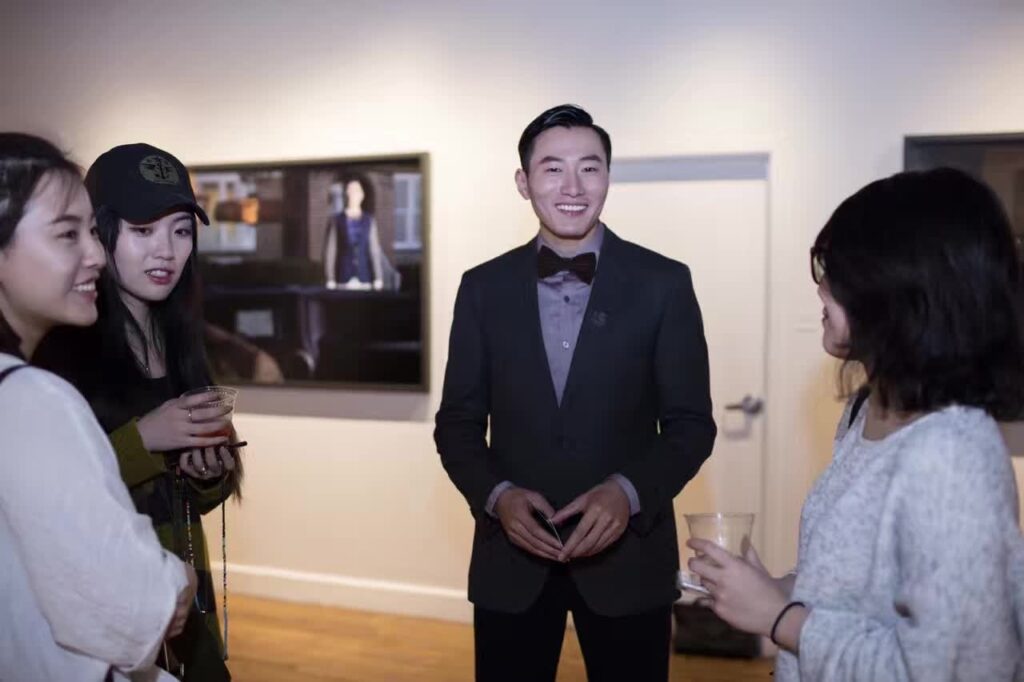
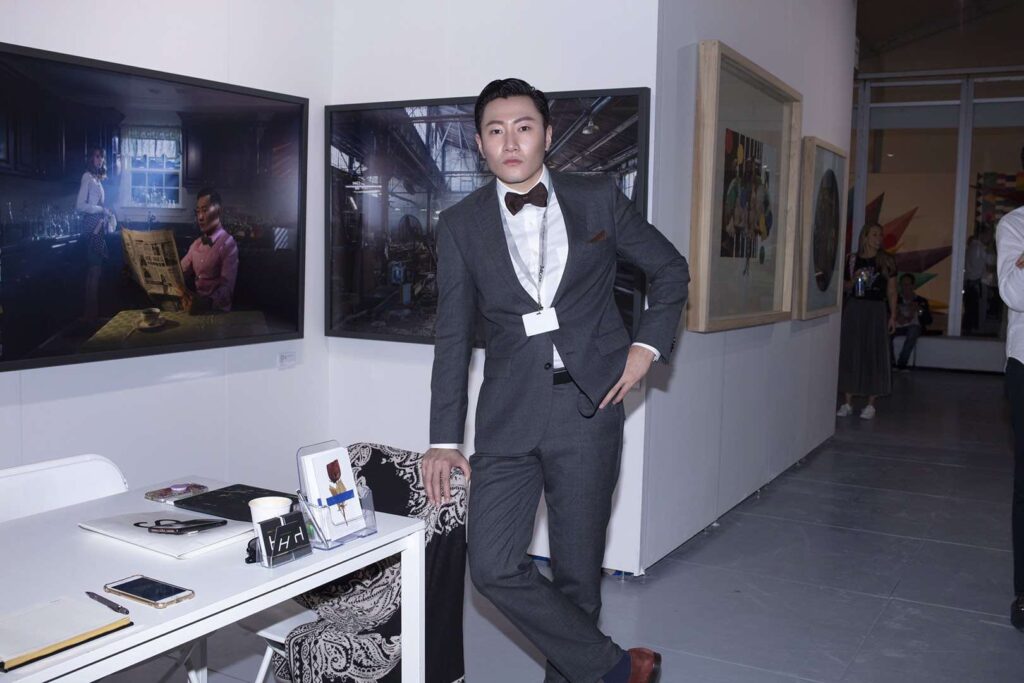
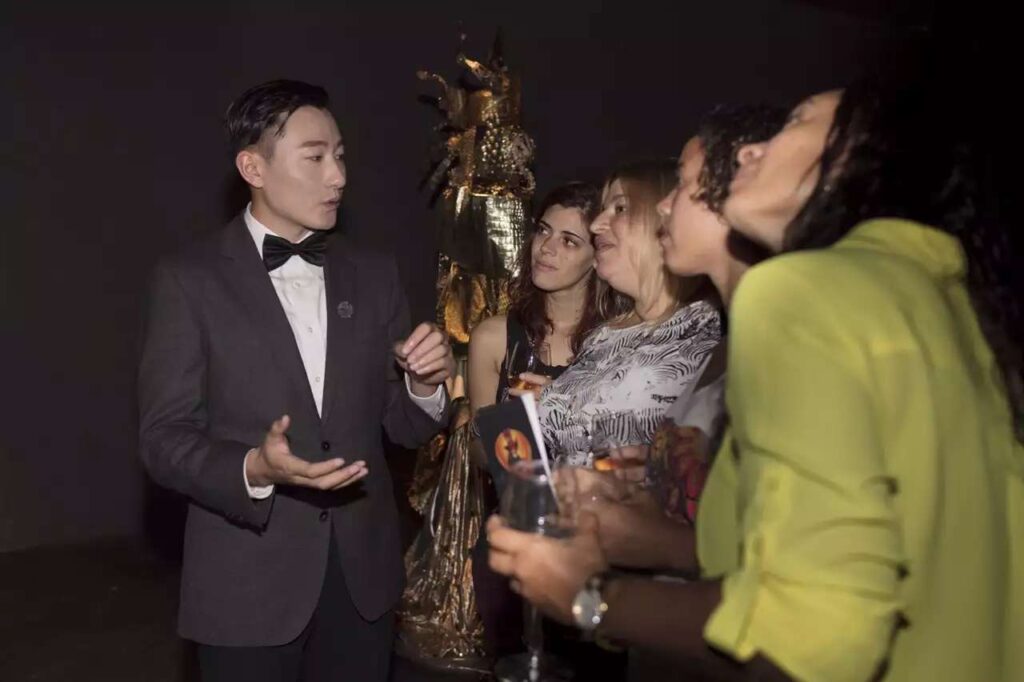
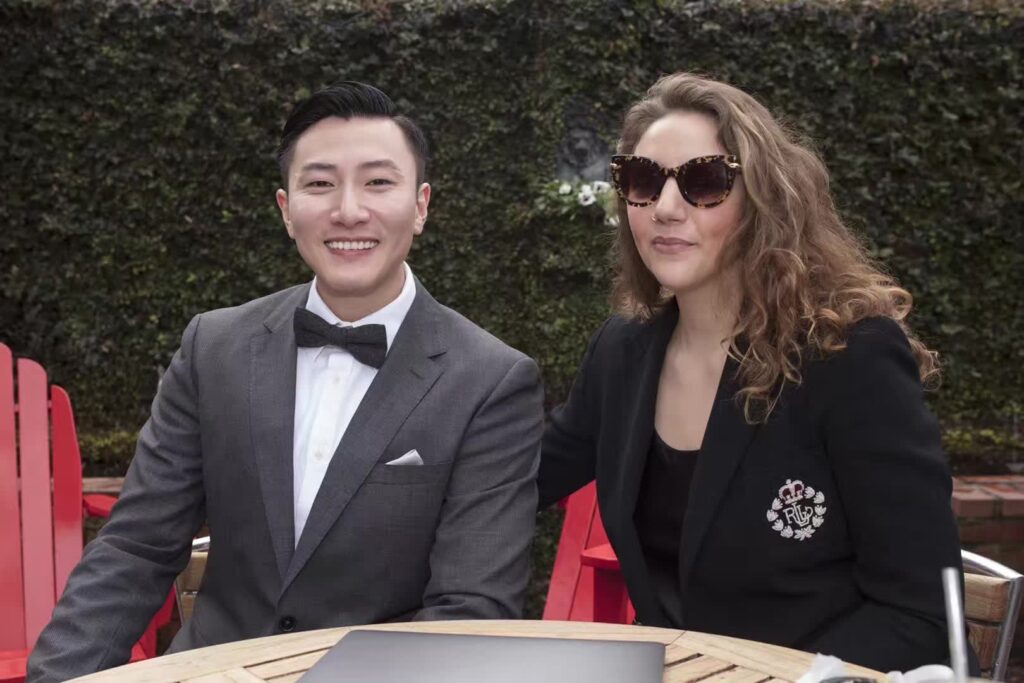
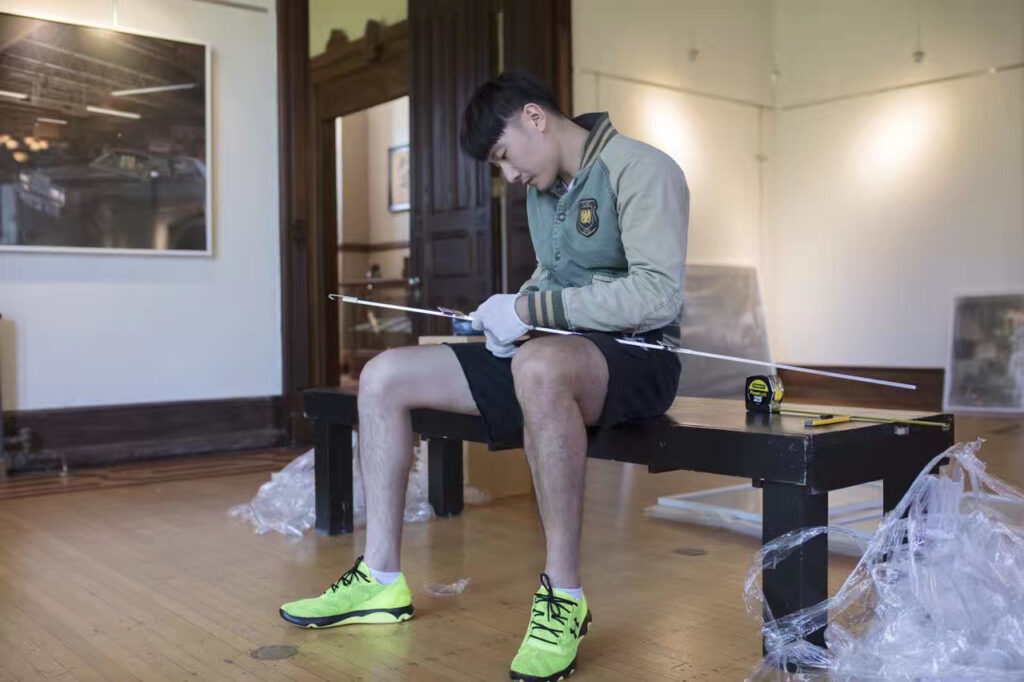
Born in Shanghai, Bin Feng is the founder of Haipai Gongbi and a contemporary artist based in New York, where he maintains a permanent studio. He received his BFA from the Shanghai Institute of Visual Arts at Fudan University and his MFA from the Savannah College of Art and Design in the United States. His practice centers on overglaze painting on porcelain, using porcelain as a painting surface to extend the possibilities of contemporary painting through a medium deeply rooted in cultural history. Grounded in the dialogue between Eastern and Western cultures, Feng brings Eastern lines, colors, and patterns into a contemporary visual language. Through his work, he connects different aesthetic traditions, allowing Chinese cultural imagery to move across time and geography into a contemporary global context and creating points of visual connection for audiences from different cultural backgrounds.
The cultural memory carried by porcelain, together with the distinctive relationship between its surface, light, and color, is central to Feng’s choice of medium. Rather than approaching porcelain as a material for functional objects, he explores its expressive potential as a surface for contemporary painting. Using the precise and highly controlled lines of gongbi painting, he divides space, constructs compositions, and brings contemporary subjects into dialogue with the material qualities of porcelain. Through this process, he has gradually developed the distinctive visual language of Haipai Gongbi.
Color is another defining element of Feng’s practice. Working from the tradition of overglaze polychrome painting, he reformulates the mineral pigments associated with the Kangxi wucai palette, reducing saturation and increasing luminosity to create a softer, more contemporary chromatic language. The contrast between red and green has become one of the most recognizable features of his work. The tension between these colors runs through both composition and narrative, reflecting recurring relationships between order and nature, protection and exploration.
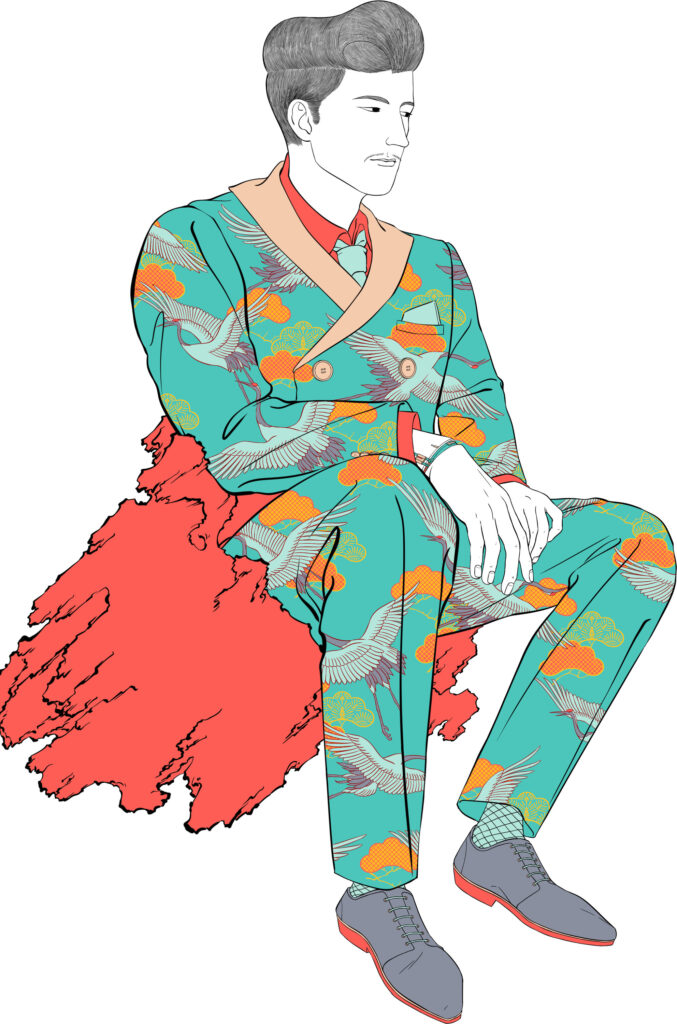
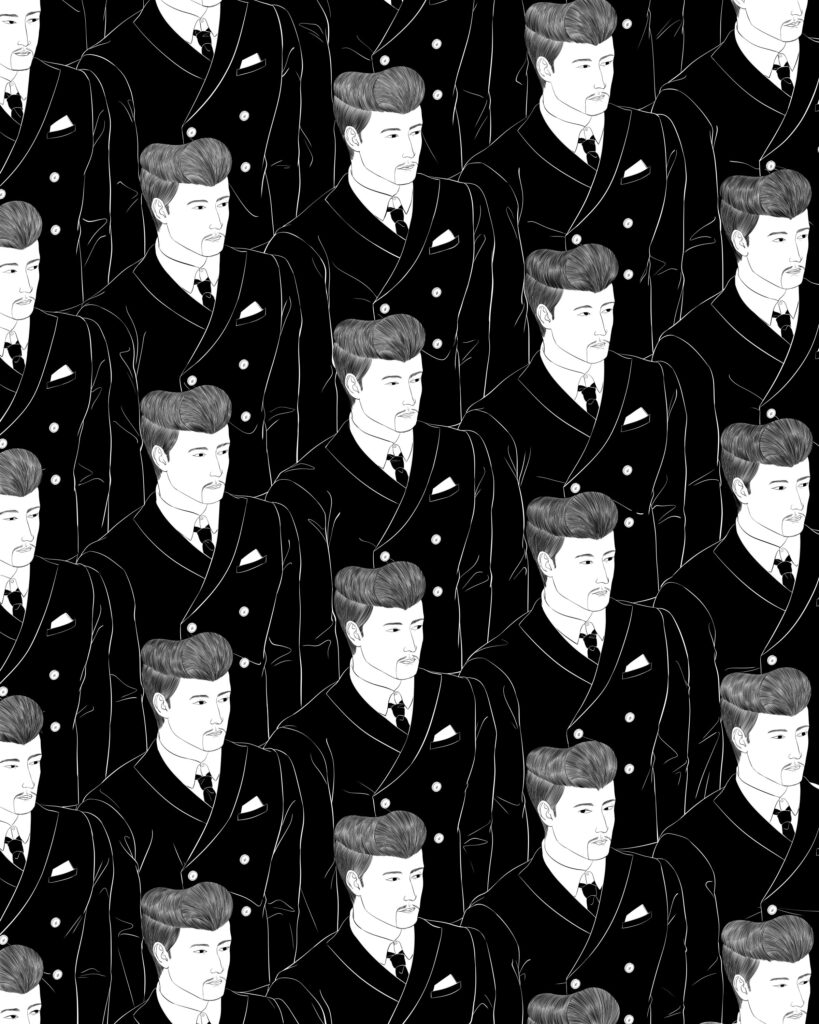
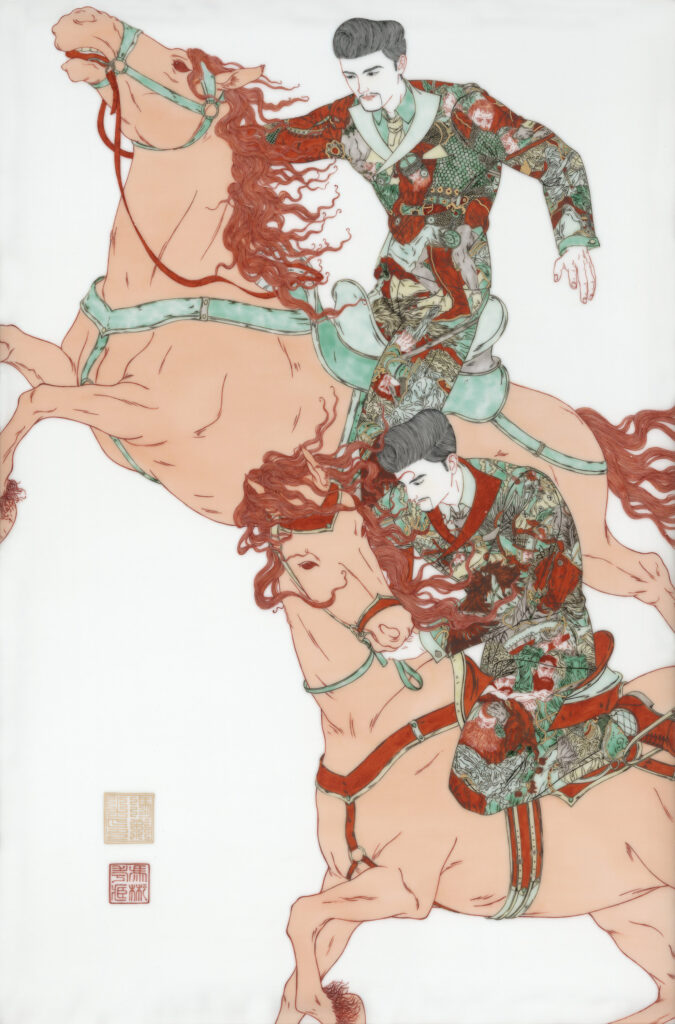
Feng is also the creator of Suitman, an art IP centered on figures dressed in suits composed of Eastern-inspired patterns. By transforming the globally recognizable suit into a surface for cultural expression, Suitman creates a meeting point between shared contemporary imagery and Eastern visual traditions. With the development of 296 patterns and a growing range of cross-disciplinary collaborations, Suitman has evolved from an artistic image into a broader art brand.
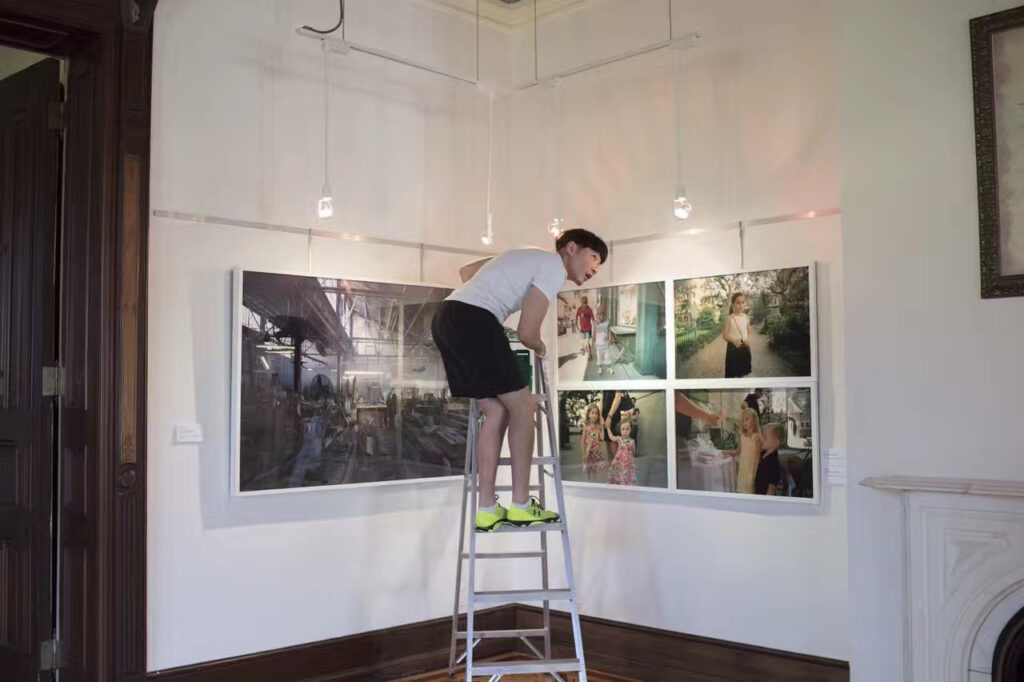
Feng’s work has been presented in more than 200 exhibitions worldwide and is held in notable private and institutional collections. His work has also been exhibited alongside works by Andy Warhol, Robert Cottingham, and Robert Rauschenberg, and has appeared at international art fairs including Art Scope, Art Palm Beach, and Art Central Hong Kong. His porcelain paintings were presented as part of the China Pavilion at the International Organizations Joint Pavilion during Expo 2025 Osaka, and he has also held a solo retrospective exhibition at the World Expo Museum in Shanghai.
Feng has developed art collaborations with internationally recognized brands and institutions including Acqua di Parma under LVMH, Swatch, the Peace Hotel, and Sun Hung Kai Properties. His work and related projects have been featured by major media outlets including CCTV, HuffPost, and Forbes. Through the continuing development of Haipai Gongbi, Bin Feng brings together precise linework, reformulated color on porcelain, and an expanding language of patterns to establish a distinctive voice within contemporary painting.


1 / 8
About Suitman
Suitman
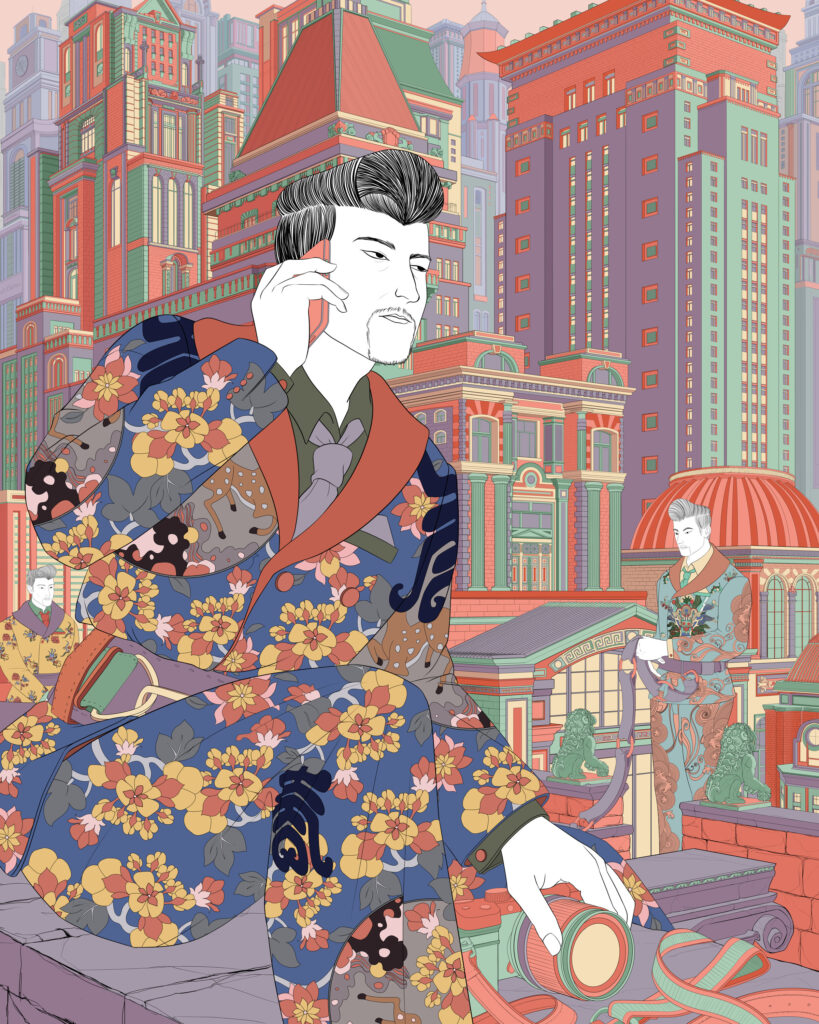
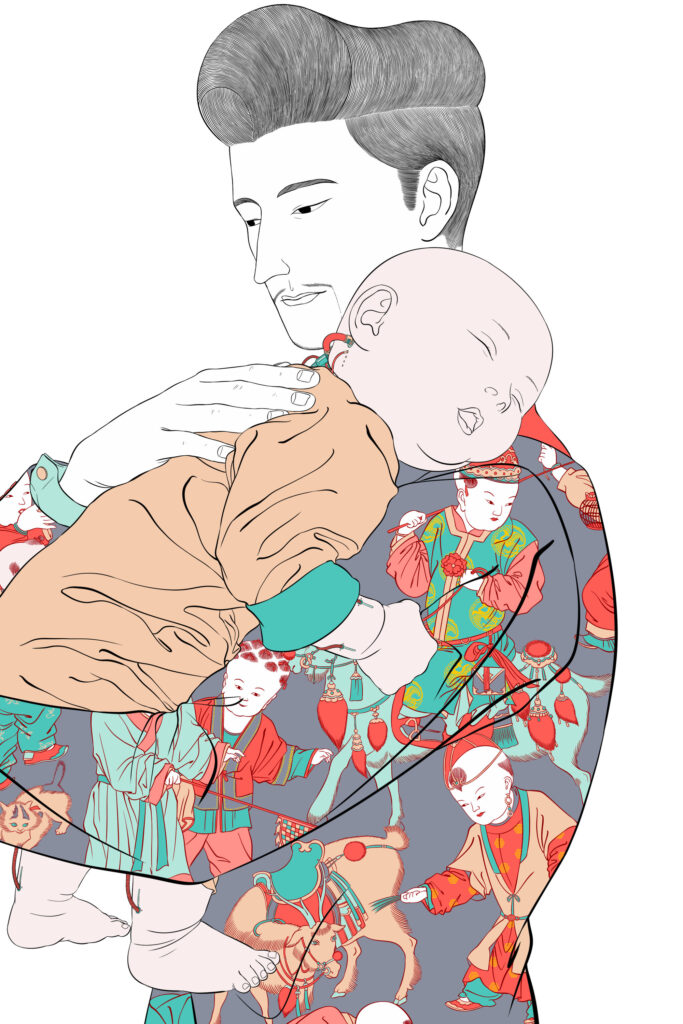
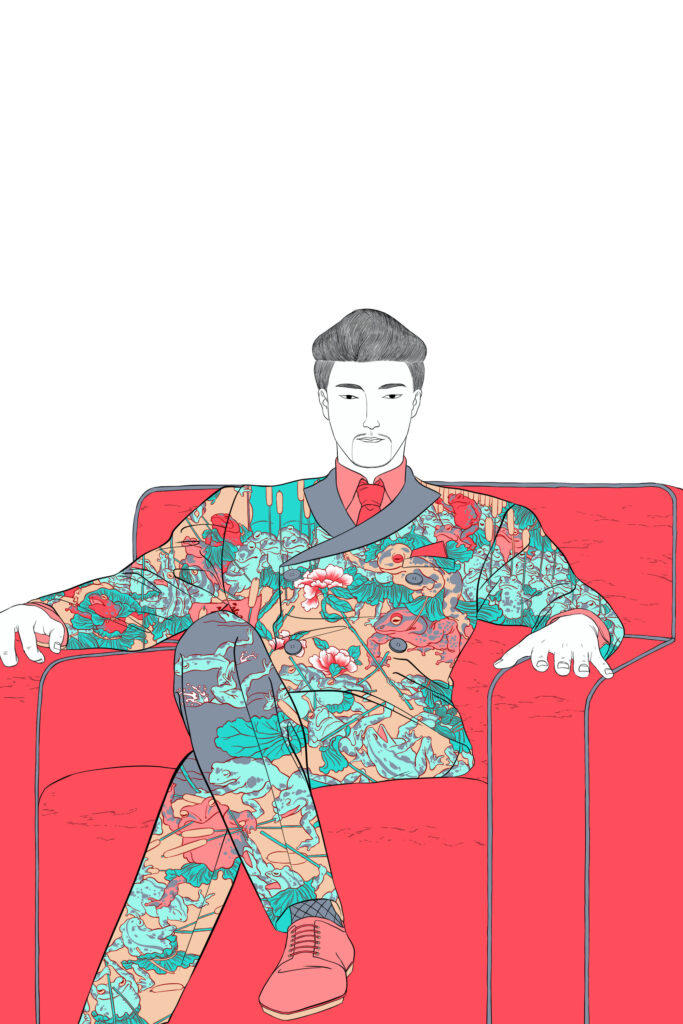
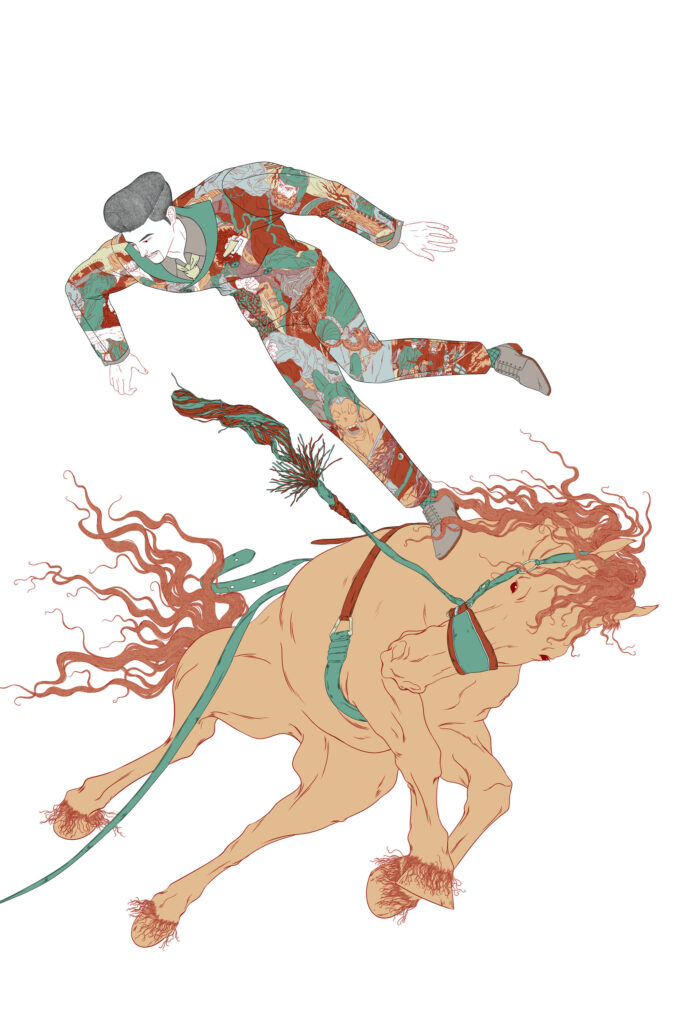
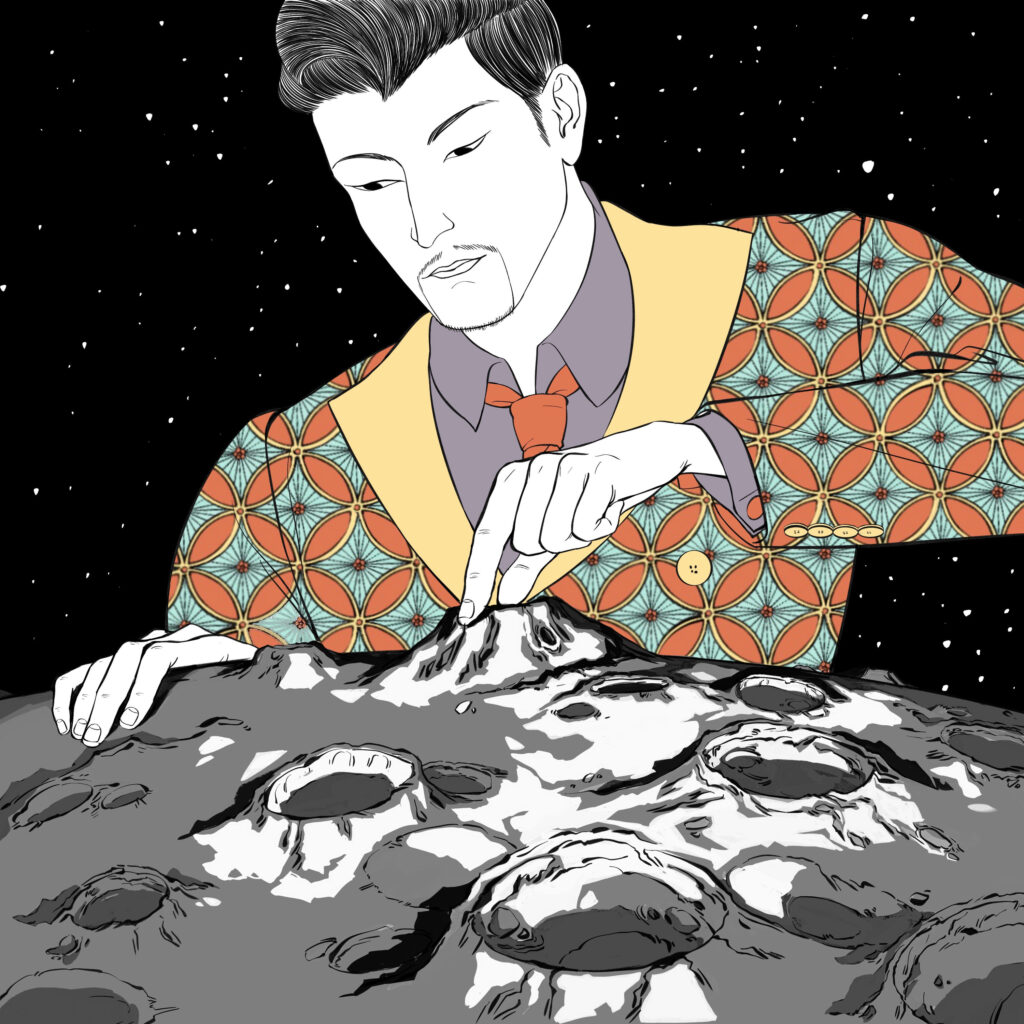
Suitman is an art IP and brand created by Bin Feng. Moving between past and present, East and West, tradition and the future, Suitman acts as a cultural messenger, using one of the world’s most familiar forms of clothing to connect different aesthetic experiences. Through this character, Bin Feng extends his artistic ideas and cultural expression into a recognizable visual identity.
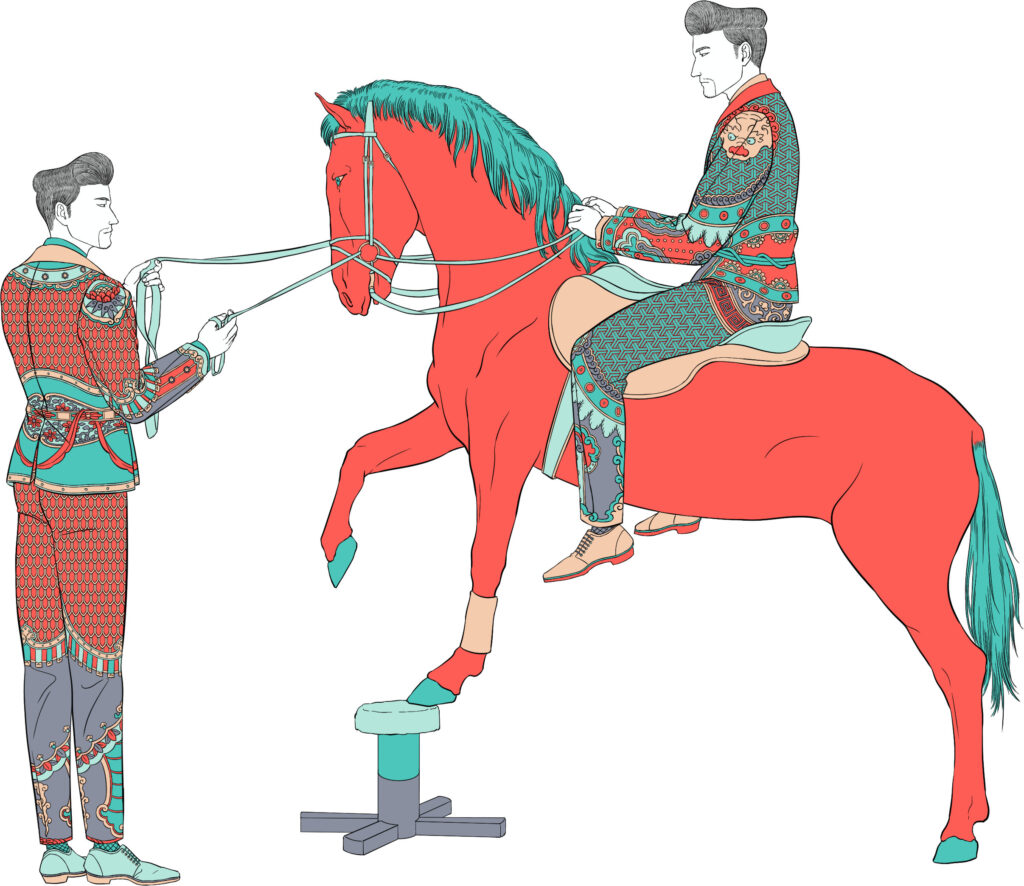
Suitman originated in Feng’s early staged photography, in which the artist himself appeared in a suit to perform different roles within constructed scenes. Over time, collectors began to associate this recurring figure with Feng, and the name “Suitman” gradually emerged. Although performed by the artist himself, Suitman was never intended as a self-portrait. From the beginning, he functioned as a character carrying the artist’s ideas. As Feng’s practice expanded into Haipai Gongbi and painting on porcelain, Suitman began to wear suits covered with Eastern-inspired patterns, evolving from a performed figure into an independent artistic image that carries both cultural memory and contemporary imagination.
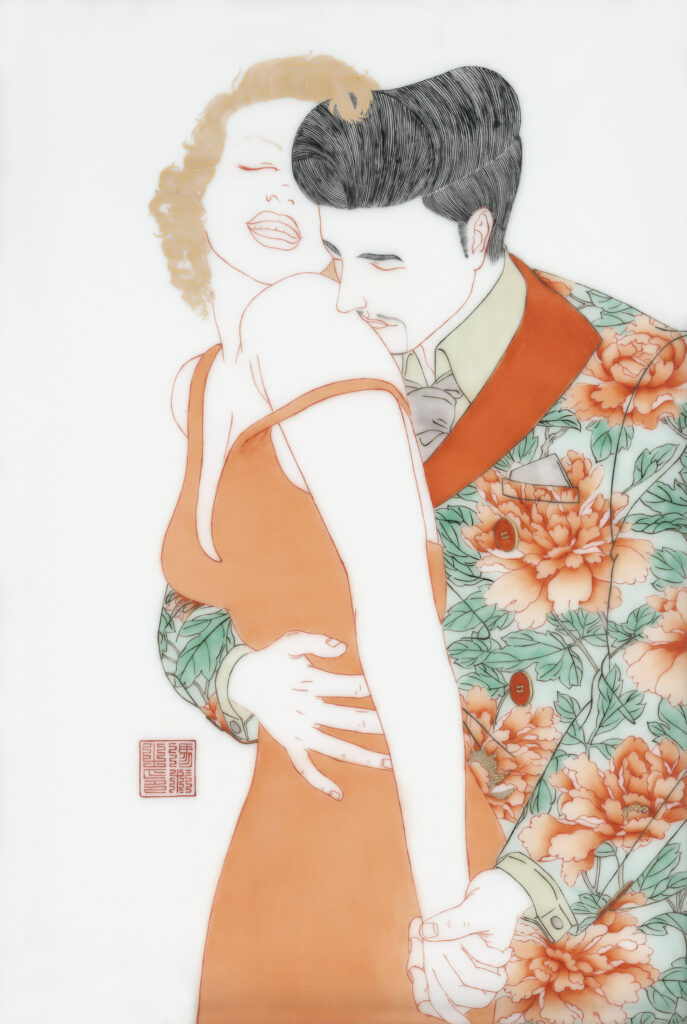
The suit serves as a globally recognizable visual language, while the patterns carry memories of Eastern culture. Feng treats the suit as a canvas within the painting, integrating line, color, and pattern into its structure so that the meeting of Eastern and Western cultures becomes something visible and tangible. In his work, Suitman appears in everyday settings, urban architecture, and imagined futures, bringing traditional patterns into contemporary life and inviting viewers to discover new connections between the familiar and the unfamiliar.
To date, Bin Feng has created 296 distinct Eastern-inspired patterns for Suitman, many of them developed through the wucai color language of Haipai Gongbi. Coin-pattern brocade expresses wishes for abundance; diamond patterns suggest order; cloud motifs carry blessings; and longevity-lock patterns convey hopes for safety and enduring well-being. Together, these motifs form an evolving visual system that brings historical aesthetics and cultural emotions into a contemporary and global context.
The world of Suitman has expanded beyond painting into physical garments, watches, fragrance, jewelry, and other forms. Through pattern licensing and artistic collaborations, Suitman has gradually developed into a brand rooted in Bin Feng’s artistic practice. Across every medium, the idea remains consistent: to connect Eastern and Western cultures through art, allowing culture to move across time and place while creating a shared aesthetic experience for audiences from different backgrounds.
1 / 8
Haipai Gongbi Porcelain Painting
Haipai Gongbi Porcelain Painting
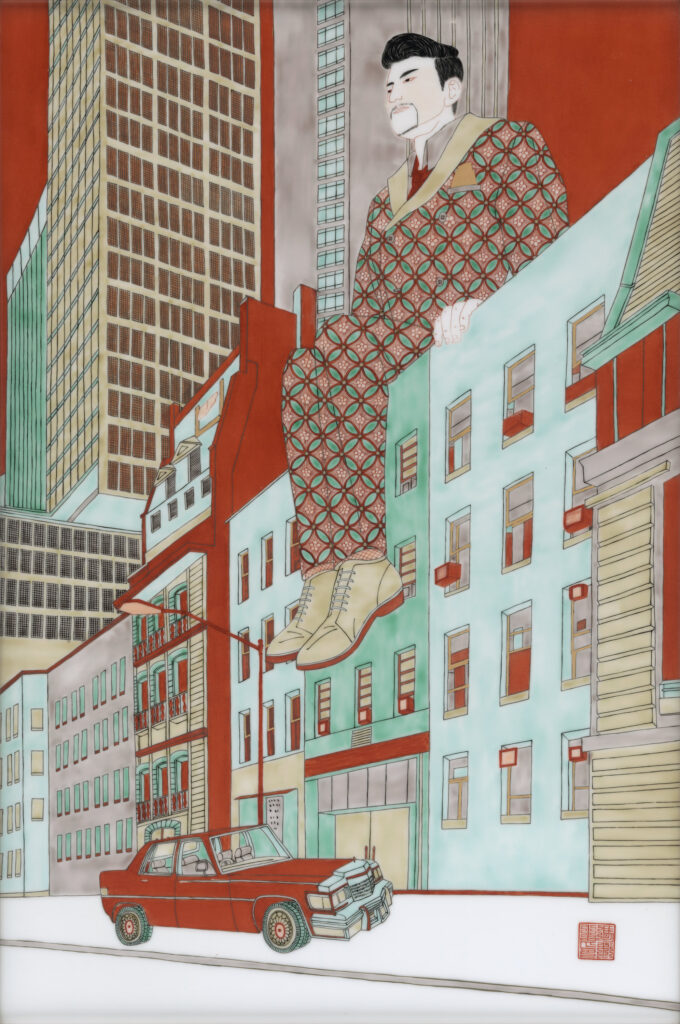
Haipai Gongbi is an Eastern realist painting practice founded by Bin Feng. Using the brush as his primary tool, Feng applies the techniques of traditional Chinese gongbi painting to contemporary subjects. Precise, highly controlled lines and distinctive brushwork form an important part of its visual identity, bringing gongbi’s close attention to form, structure, and detail into contemporary life, urban experience, and imagined futures.
Haipai Gongbi developed through a visual experience shaped by the meeting of Eastern and Western cultures. As a city where these traditions have long intersected, Shanghai provides an important cultural context for the integration of traditional gongbi with modern artistic language. Feng draws on the lines, colors, patterns, and cultural imagery of Chinese tradition while incorporating modern approaches to space, light, and composition. In doing so, he extends gongbi beyond historical subject matter into urban landscapes, contemporary figures, and everyday life, creating a cross-cultural visual language with both historical depth and contemporary tension.
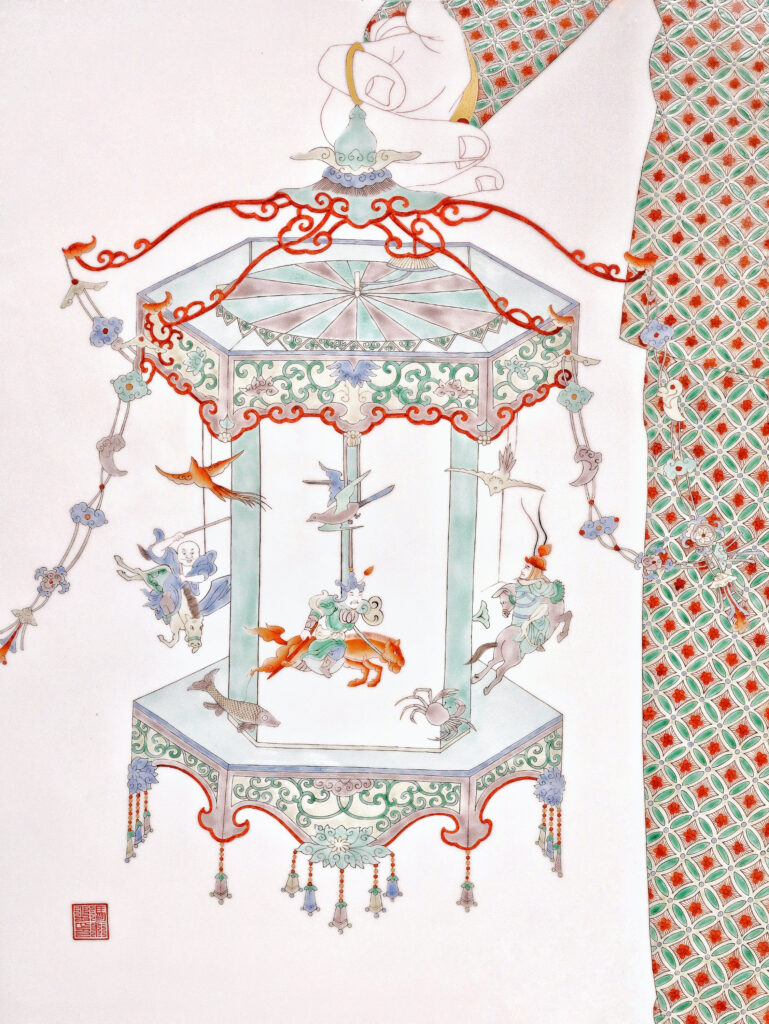
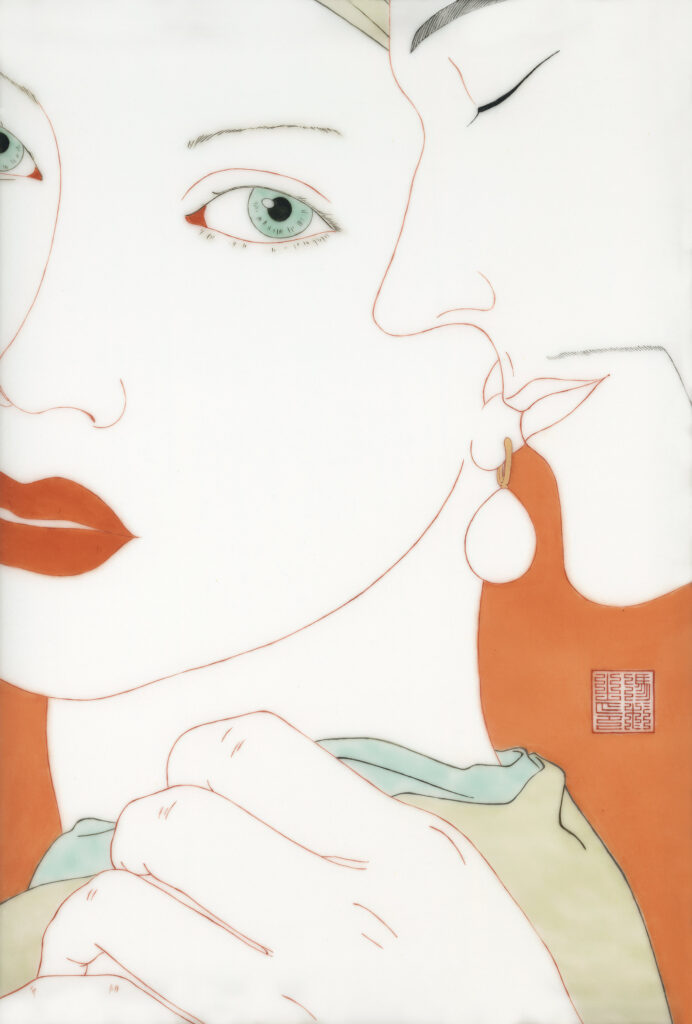
Haipai Gongbi porcelain painting is the development of this language on porcelain. Feng combines brushwork, gongbi linework, and overglaze polychrome painting to construct space and organize imagery on porcelain panels, transforming traditional painting techniques into a language for contemporary ideas. The cultural memory carried by porcelain, together with the distinctive relationship between its surface, light, and color, gives traditional gongbi new expressive possibilities in a different material context.
Color is another defining element of Feng’s practice. Using the traditional Kangxi wucai palette as a foundation, he developed a new color system by reformulating mineral pigments, reducing saturation, and increasing luminosity to create a softer and more contemporary chromatic language. The contrast between red and green has become a key visual feature of his work. Through this approach, tradition and modernity, East and West, are brought into a new balance within the same image, giving Haipai Gongbi porcelain painting its distinctive visual character.
绅士与骏马7-693x1024.jpg)

1 / 7